 Trendsmill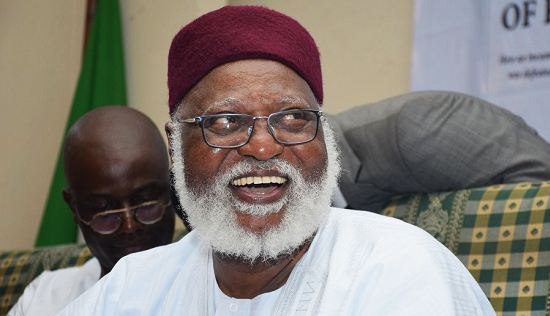
The image of former Nigerian Head of State General Abdulsalami Abubakar has appeared in a promotional campaign by Krishna Shalby Hospital in Ahmedabad, Gujarat, after he underwent knee replacement surgery there.
The hospital said Abubakar received a total knee replacement through its international patient-care programme.
Promotional material featuring him carries the slogan “Clinical Excellence. Beyond Borders” and presents his treatment as evidence of the hospital’s orthopaedic expertise and ability to serve patients worldwide.
The campaign drew attention in Nigeria after activist and publisher Omoyele Sowore shared the material on X. Sowore questioned the symbolism of using a former Nigerian leader to promote a foreign hospital and linked it to broader concerns about Nigeria’s healthcare infrastructure.
The case has renewed debate over why wealthy Nigerians and prominent public figures seek specialised treatment abroad.
It has attracted particular attention because Abubakar served as Nigeria’s military Head of State from 1998 to 1999, overseeing the transition to democratic rule.
Shalby says its network has treated patients from around the world and performed more than 100,000 joint-replacement surgeries.
Its facilities provide orthopaedics, joint replacement, cardiology, oncology and other specialised services. The hospital said it was honoured to treat Abubakar and thanked him for trusting its medical team.
The surgery follows General Abubakar’s previous treatment abroad. In 2022, he confirmed seeking medical care outside Nigeria after developing knee problems, saying doctors had advised further specialist treatment.
In July 2025, he disclosed that he had been admitted to the same London hospital where former President Muhammadu Buhari was receiving treatment shortly before his death.
Although Shalby has presented Abubakar’s treatment as a success story for international medical care, many Nigerians view it as a reminder of the limited availability of specialised healthcare at home.
The campaign has consequently become part of a wider discussion about Nigeria’s healthcare system, leadership and the continued movement of patients across borders.