 Trendsmill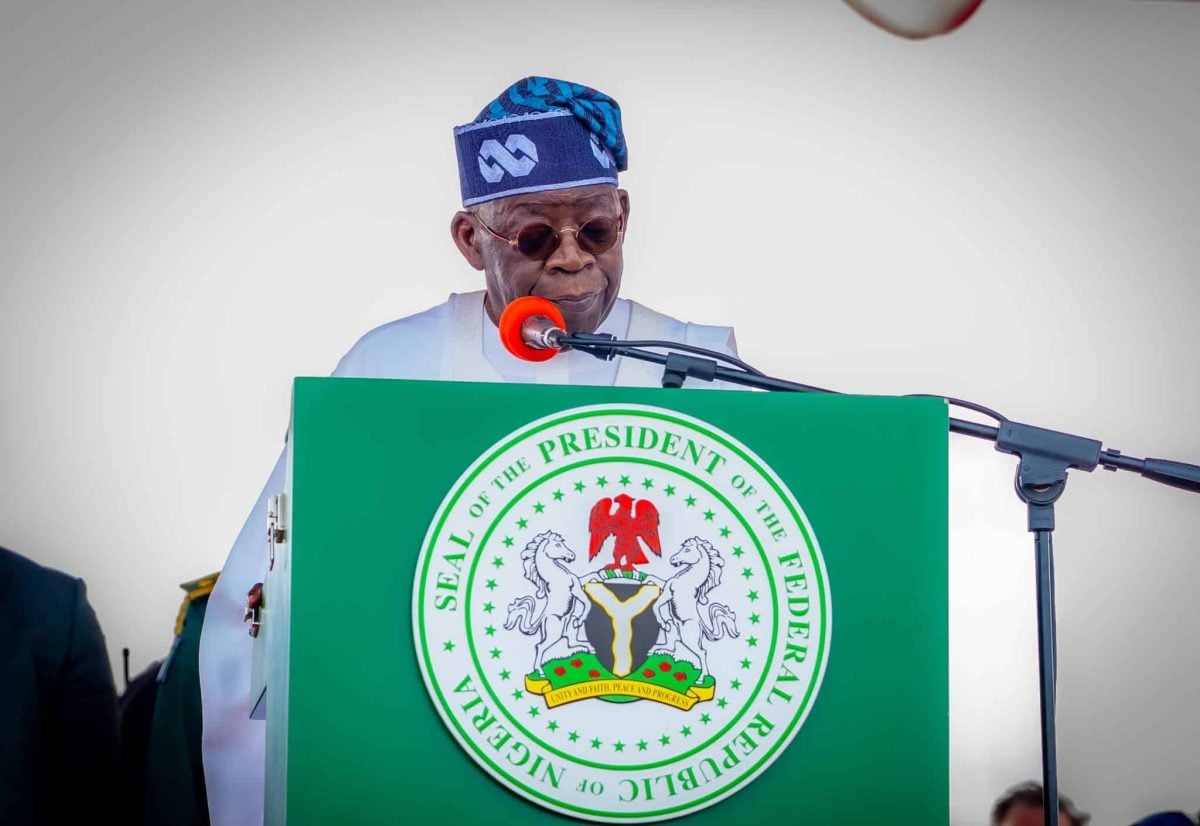
President Bola Ahmed Tinubu has declared that Nigeria is moving beyond the difficult phase of economic reforms and entering what he described as an “age of prosperity”, as the country marked its 66th Independence anniversary on Thursday.
In his Independence Day address to Nigerians, Tinubu defended the economic policies introduced since he assumed office in 2023, acknowledging that the reforms had brought real hardship but insisting that they had corrected what he described as deep structural weaknesses in the economy.
The President argued that the country had reached a turning point, saying the immediate task was no longer simply to stabilise the economy but to translate the gains from the reforms into broader prosperity.
“The emergency treatment is over. The foundation has been repaired,” Tinubu said, adding that the government’s purpose had now shifted towards “shared and widespread prosperity.”
He pointed to economic indicators including growth of more than four per cent in 2026, lower oil theft, a decline in inflation from its peak, rebuilt foreign reserves and greater stability in the foreign exchange market.
Tinubu also highlighted Nigeria’s non-oil export earnings, which he said exceeded $6 billion in 2025, describing it as the highest revenue from non-oil exports in the country’s history.
The President used the address to reject calls for a return to policies he argued had allowed economic distortions to persist, insisting that his administration would not reverse the direction of its reforms.
He acknowledged, however, that millions of Nigerians continue to struggle with food, education, healthcare and transportation costs.
Tinubu said those difficulties were the result of problems that had accumulated over decades and maintained that his administration could not erase all of them within four years, but could change the country’s trajectory.
“We cannot erase in four years what accumulated over generations. But we can change its course,” he said.
Reducing the cost of living, he said, would remain a major priority, with the government focusing on agricultural production, mechanised farming, irrigation, storage, transportation and infrastructure connecting farms and factories to markets.
The administration also plans to place job creation, enterprise and industrial expansion at the centre of the next phase of its economic programme. Tinubu said the government would use Nigeria’s gas resources to support new industries, revive factories, expand digital connectivity and provide businesses with infrastructure and financing.
He also highlighted government support programmes, including the Nigerian Education Loan Fund, consumer credit through CREDICORP and expanded assistance for vulnerable households.
The President said such interventions were intended to help Nigerians through the transition rather than replace the broader goal of reducing poverty through economic growth and productive opportunities.
“Rather than fail the promise of a better future for our children, the time has come for us to build that future,” Tinubu said.
He described the next phase as an attempt to ensure that Nigeria’s economic potential becomes more visible in the daily lives of citizens, with greater access to jobs, affordable goods, education, healthcare and opportunities.
“The age of reform has done its work. Now begins the age of prosperity,” the President declared.
Tinubu ended the broadcast by urging Nigerians to look ahead rather than return to the difficulties of the past, saying the country had “corrected its course” and was moving towards what he described as a Nigeria of “abundance and opportunity.”