 Trendsmill
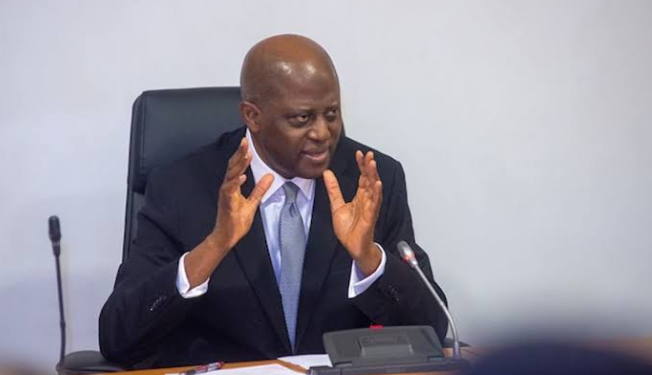
Central Bank of Nigeria (CBN) Governor Olayemi Cardoso has said Nigeria’s fiscal crisis forced policymakers to explore alternative sources of revenue and foreign exchange, warning that dependence on oil earnings was not a sustainable economic model.
Cardoso made the remarks on Thursday during a panel discussion at the World Bank and International Monetary Fund (IMF) annual meetings in Bangkok, Thailand, where global policymakers examined ways to build more resilient economies amid economic uncertainty.
“When you are going through a crisis, it forces you to be creative,” Cardoso said, explaining how the economic conditions inherited by President Bola Tinubu’s administration pushed authorities to rethink existing policies.
The CBN governor said Nigeria entered the period with severely depleted external reserves and substantial outstanding foreign exchange obligations, leaving policymakers with limited room to manoeuvre.
According to Cardoso, the country’s net external reserves had fallen to about $3 billion at one point, while outstanding foreign exchange obligations stood at approximately $7 billion.
He said the CBN adopted orthodox monetary policies and pursued reforms aimed at addressing the obligations and restoring stability to the foreign exchange market.
Cardoso argued that Nigeria’s reliance on oil revenues had become increasingly unsustainable, particularly when production challenges prevented the country from earning the foreign exchange and government revenue expected from crude exports.
“We were clear that relying on oil was not a sustainable model,” he said, according to TheCable’s report of the remarks.
The CBN governor said the authorities consequently turned to alternative sources of foreign exchange, including diaspora remittances, while removing obstacles that discouraged Nigerians abroad from sending money through formal channels.
He said the measures were part of broader efforts to diversify foreign exchange inflows, strengthen market confidence and create additional sources of economic value.
Cardoso also pointed to the Dangote Refinery as an example of investment that could support domestic value addition, reduce reliance on imported refined petroleum products and improve foreign exchange stability.
Nigeria’s foreign exchange market has experienced a period of relative stability following major policy changes, while the CBN has reported stronger external reserves. Cardoso said the reforms had helped improve confidence in the economy.
However, he stressed the need to sustain the policy direction, arguing that the country must demonstrate that the changes are durable rather than temporary responses to economic pressure.
His remarks come as the government faces the challenge of broadening its revenue base and reducing exposure to fluctuations in international oil prices.
Although crude oil remains a major source of foreign exchange and public revenue, production disruptions and volatility in global energy markets have repeatedly exposed the weaknesses of relying heavily on a single commodity.
The panel discussion also featured IMF Managing Director Kristalina Georgieva and other international policymakers, who examined how countries could withstand economic shocks, sustain growth and respond to an increasingly fragmented global economy.