 Trendsmill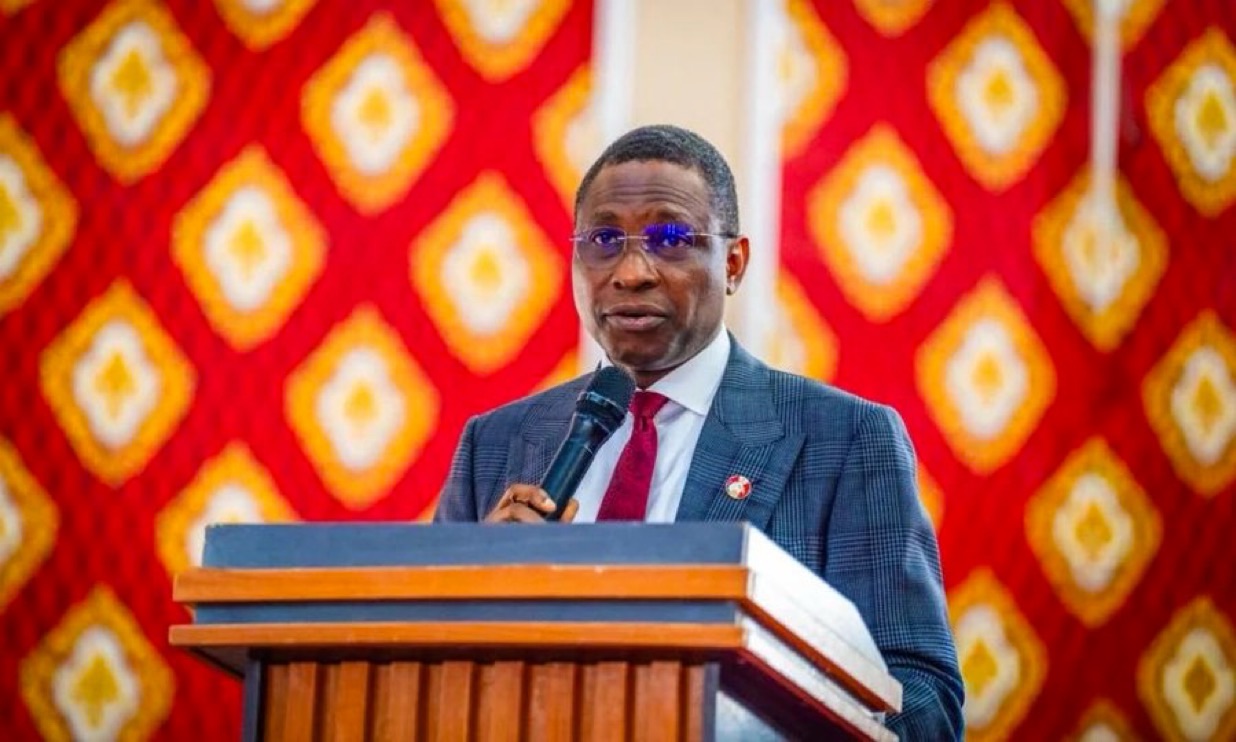
The Chairman of the Economic and Financial Crimes Commission, Ola Olukoyede, has drawn attention to the scale of assets recovered by the anti-graft agency after describing the vice-chancellor’s residence of a recently forfeited private university as possibly larger than President Bola Tinubu’s official residence at the Aso Rock Villa.
Olukoyede made the remark in a video posted on his official X account on September 4, while discussing the Federal Government’s efforts to convert recovered assets into public facilities.
The EFCC chairman did not identify the university by name in the video. However, the description corresponds with Rayhaan University in Kebbi State, whose permanent site, temporary site, third site and vice-chancellor’s residence were among properties finally forfeited to the Federal Government.
A Federal High Court in Abuja ordered the final forfeiture of 48 properties linked to former Attorney-General of the Federation and Minister of Justice, Abubakar Malami, in July.
Justice Joyce Abdulmalik granted the EFCC’s application after holding that the commission had established that the properties were reasonably suspected to be proceeds of unlawful activities and had not been acquired from legitimate sources.
The university was one of several assets listed in the forfeiture order.
Other properties included Rayhaan Radio, Rayhaan Agro Allied Factory, hotels, commercial buildings, warehouses, residential properties, filling stations and other assets across several states.
Olukoyede used the example while explaining how recovered assets could be redirected towards public benefit.
He pointed specifically to another university, NOK University in Kachia, Kaduna State, which had previously been forfeited and converted into the Federal University of Applied Sciences, Kachia.
According to the EFCC chairman, the university had already matriculated 1,909 students in December 2025 following its conversion into a federal institution.
He said such asset recovery could produce benefits beyond the immediate value of the properties by creating educational opportunities and stimulating economic activity in host communities.
Turning to the recently forfeited university in Kebbi, Olukoyede said visitors would be struck by the scale of its facilities.
He said the institution had both temporary and permanent sites and highlighted the size of the vice-chancellor’s residence.
“The house that was built for the vice-chancellor alone is probably bigger than the president’s house in the villa,” he said.
The comparison has attracted attention because of the size of the official presidential complex in Abuja, but Olukoyede presented it as an illustration of the scale of assets recovered through the EFCC’s investigations.
The court’s July ruling forms part of a broader legal process involving properties linked to Malami and other respondents.
Earlier proceedings had involved applications by the EFCC for the final forfeiture of dozens of properties.
The commission had argued that the respondents had failed to provide sufficient evidence to overturn earlier interim forfeiture orders.
The final judgment ultimately covered 48 properties.
The case remains significant in the EFCC’s wider campaign to recover assets suspected of being connected to unlawful activities and ensure that forfeited properties can be put to public use.
For the commission, Olukoyede’s comments underline its argument that asset recovery should not end with seizure or forfeiture but should also produce tangible benefits for Nigerians.
The Federal Government now holds the forfeited assets subject to applicable legal and administrative processes governing their management and use.