 Trendsmill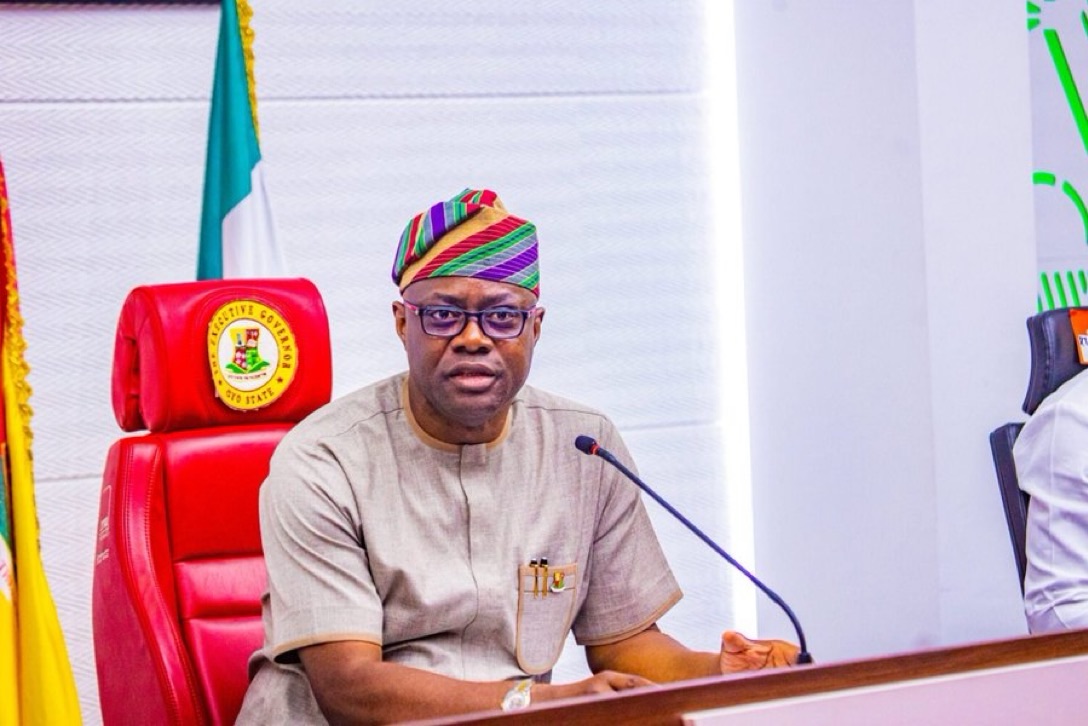
A fresh controversy has emerged in Oyo State following criticism of Governor Seyi Makinde over remarks concerning the political activities of traditional rulers in the state.
A group has condemned what it described as an alleged threat by the governor against traditional rulers who openly participate in partisan politics, arguing that the traditional institution should not be subjected to political pressure.
The controversy followed comments by Makinde in which he urged monarchs across the state to remain politically neutral.
The governor reportedly warned that traditional rulers who choose to openly participate in partisan politics should be prepared to be treated as politicians.
Makinde made the remarks while speaking at the first coronation anniversary of the Eleruwa of Eruwa, Oba Samuel Adegbola.
The occasion also featured the commissioning of the reconstructed palace of the traditional ruler.
The governor used the event to stress what he considers to be the responsibility of traditional rulers in maintaining peace, unity and stability within their communities.
According to the governor’s position, monarchs occupy a unique place in society because they are expected to serve as fathers to all members of their communities, irrespective of political affiliation.
He therefore urged them to avoid openly aligning themselves with political parties or candidates.
The remarks have, however, drawn criticism from the group, which interpreted the governor’s warning as an attempt to intimidate or pressure traditional rulers.
The group’s position has added a new dimension to the continuing debate over the relationship between political authorities and traditional institutions in Oyo State.
Traditional rulers do not hold elected political offices, but they remain influential figures within their communities. Their authority often extends beyond ceremonial duties, with monarchs playing roles in conflict resolution, cultural preservation and community development.
Political parties and politicians also frequently visit traditional rulers during election campaigns and other political activities.
Because of this influence, the question of whether monarchs should openly support political parties or candidates has remained sensitive.
Makinde’s argument is that traditional rulers should remain above partisan politics so that they can maintain the confidence of people with different political loyalties.
His comments also come at a politically significant period, with preparations for the 2027 general elections already gaining momentum across the country.
Makinde himself has declared his ambition to contest for the presidency in 2027, placing him among the politicians whose political activities are already attracting national attention.
The governor has repeatedly spoken about the need for issue-based politics and has urged political actors to focus on their programmes rather than personal attacks.
His latest remarks concerning traditional rulers have nevertheless generated criticism from those who believe monarchs should not be subjected to warnings that could be interpreted as threats.
The controversy highlights the delicate position occupied by traditional rulers in Nigeria’s political system.
While monarchs are expected to preserve the interests of their communities, they are also citizens with individual political rights.
The challenge is therefore to maintain a balance between those individual rights and the neutrality expected from institutions that represent entire communities.
For the group challenging Makinde, the governor’s comments crossed that delicate line.
For the governor and his supporters, however, the warning can be interpreted as an appeal for traditional rulers to preserve their neutrality and avoid becoming partisan political actors.
There has been no indication that the governor intends to withdraw his position.
As political activities increase ahead of the 2027 elections, the role of traditional rulers is likely to remain an important issue in Oyo State.
The latest controversy has therefore placed Makinde’s relationship with the state’s traditional institution under renewed scrutiny.