 Trendsmill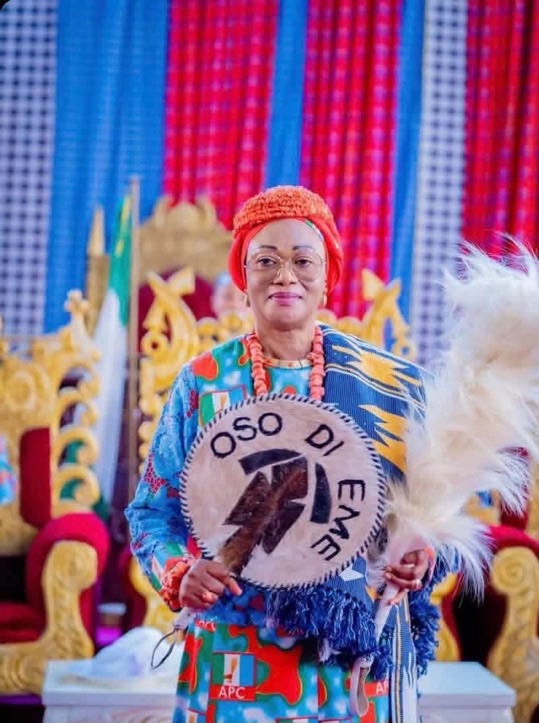
Nigeria’s First Lady, Oluremi Tinubu, has received a traditional chieftaincy title in Imo State during a visit that brought her together with women in the state.
Tinubu was conferred with the title “Oso Di Eme I” during the visit.
The honour gave the occasion a strong cultural character, but the First Lady’s message went beyond the ceremony. She asked the women to pray for President Bola Tinubu and for Nigeria.
The combination of a traditional title and an appeal for prayers placed culture, leadership and national affairs within the same setting.
For Tinubu, the visit offered an opportunity to connect with women in the Southeast while receiving recognition from the host community.
Traditional titles have a long history in Nigerian public life. They are often used to honour prominent individuals and can also represent a relationship between the recipient and the community conferring the title.
Tinubu’s “Oso Di Eme I” title therefore carries significance as part of her reception in Imo.
Her message, meanwhile, was directed at the national level.
Rather than limiting her remarks to the occasion itself, the First Lady asked the women to pray for the President and the country.
The request comes at a time when the administration faces continuing scrutiny over its policies and the challenges confronting Nigerians.
President Tinubu has remained at the centre of national political debate since assuming office, with supporters and critics closely watching the government’s economic and political decisions.
Against this backdrop, Tinubu’s appeal for prayers was both personal and national in its framing.
The First Lady has maintained a public engagement agenda that includes interaction with women and communities across the country. Such visits give her an opportunity to speak directly to groups outside the federal political establishment in Abuja.
In Imo, the traditional honour provided a distinctly local setting for that engagement.
The ceremony also demonstrated the continued importance of traditional institutions in the political and social life of Nigeria.
While the title is symbolic, the gathering itself offered Tinubu a platform to address women on a matter she presented as national: the need to pray for the President and Nigeria.
The visit consequently carried two messages.
The first was the traditional recognition of the First Lady as “Oso Di Eme I”.
The second was her appeal to women to remember President Tinubu and the nation in their prayers.
Together, they shaped the central moments of her Imo visit.