
 Trendsmill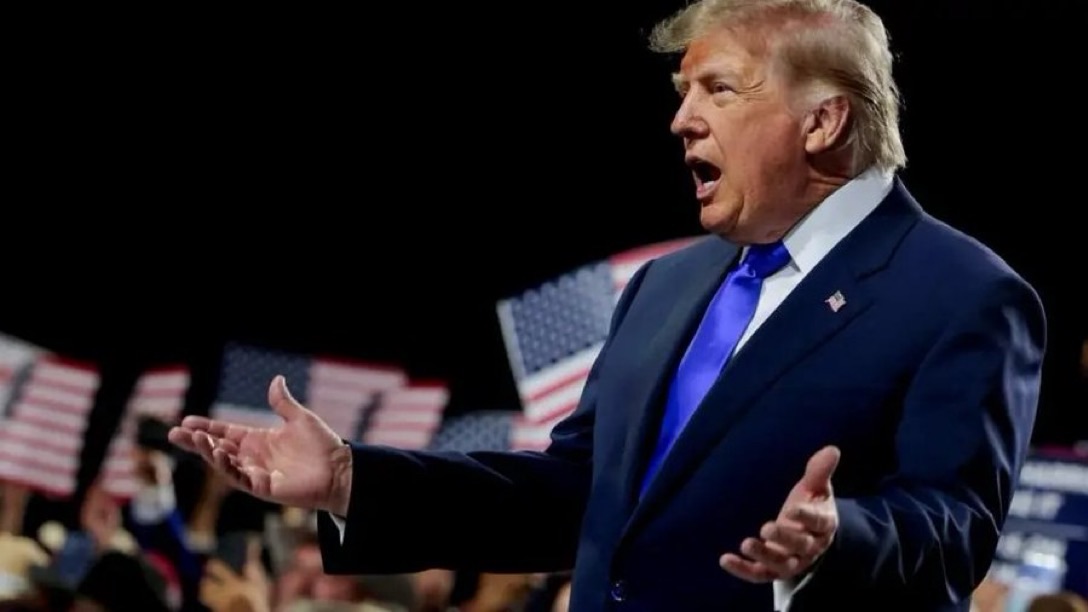
US President Donald Trump has placed a striking financial promise at the centre of the Republican Party’s campaign for November’s congressional elections, offering a potential $5,000 payment to every adult American if Republicans retain control of Congress.
Trump made the proposal as Republicans gathered in Dallas for the party’s first midterm convention, putting his economic message directly before voters less than two months before the election. The vote will determine control of the House of Representatives and Senate, and the outcome will shape how easily Trump can advance his domestic agenda during the remainder of his presidency.
The proposed payment is therefore more than a headline grabbing economic pledge. It is tied directly to the political result Trump wants from voters.
If Republicans hold both chambers, Trump says each adult citizen would receive $5,000. But the size of the proposed payment immediately raises questions about whether the promise can be converted into an actual government programme.
There are roughly 270 million adults in the United States. At $5,000 per person, a nationwide distribution could cost more than $1 trillion. Trump has not provided a detailed explanation of how the programme would be financed, while congressional approval would likely be required before the money could be distributed.
That leaves Republican candidates with a potentially powerful message but also an obvious vulnerability. Voters can understand the value of a $5,000 payment immediately, while the mechanism for delivering it remains unclear.
The November elections are already difficult territory for the party. Republicans risk losing control of at least one chamber, while dissatisfaction over living costs and other issues has created pressure on the party heading into the vote. Democrats have shown stronger motivation in polling, while Trump’s approval remains weak.
Against that backdrop, the proposed payment gives Trump another way to make the election personal and tangible for voters.
Yet the promise could face a difficult test after election day. Winning Congress would not automatically put $5,000 into Americans’ accounts. Lawmakers would still have to consider the cost, funding source, legal authority and administrative arrangements.
That is ultimately where the proposal will be judged.
For now, Trump has attached a very simple proposition to a complicated election: a Republican victory could come with a $5,000 payment for American adults. Whether voters see that as a convincing economic offer and whether Congress can turn it into reality may become two very different questions.