 Trendsmill
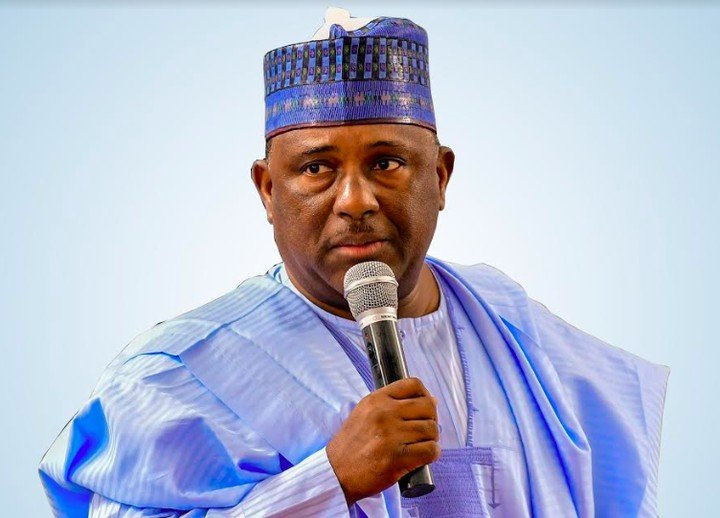
Abdul Samad Rabiu, chairman of BUA Group, says Nigeria’s foreign exchange reforms have made it easier for businesses to obtain dollars through the market, reducing their dependence on direct allocations from the Central Bank of Nigeria (CBN).
Rabiu made the remarks while speaking at the 32nd Nigerian Economic Summit in Abuja on Monday, recalling how companies previously had to approach the apex bank every two weeks to secure foreign exchange for importing machinery and raw materials.
“In the past, we had to make a pilgrimage every two weeks to the Central Bank of Nigeria here in Abuja,” he said.
According to the industrialist, the current system allows businesses to purchase foreign exchange at prevailing market rates, making access less dependent on personal appeals to the CBN.
“Today, I hardly need to go to CBN,” Rabiu said, adding that he had met CBN Governor Olayemi Cardoso only three or four times since his appointment because he no longer needed to seek foreign exchange allocations.
He said businesses required a transparent and functional foreign exchange market to plan investments, arguing that an apparently attractive official exchange rate was of little use when companies could not obtain dollars at that rate.
“Certainty gives businesses the confidence to invest,” he said.
Rabiu acknowledged, however, that the economic reforms introduced over the past three years, including petrol subsidy removal and fiscal and tax changes, had imposed significant costs on households and businesses.
He identified high borrowing costs, infrastructure deficits and pressure on household incomes as continuing challenges, urging Nigeria to focus on turning economic stabilisation into increased production, investment and shared prosperity.
The BUA chairman also called for Nigeria to build more large-scale businesses capable of driving industrial growth across manufacturing, agriculture, mining and other productive sectors.
“The question we must ask ourselves is not simply how BUA can continue to grow. It is how Nigeria can create another 100 BUAs,” he said.
Rabiu identified access to affordable, long-term financing as a major obstacle to industrial expansion, noting that large manufacturing projects can take between 10 and 20 years to realise their full potential.
He urged pension funds, insurance companies, banks, development finance institutions and capital markets to provide more patient funding for productive investments, warning that expensive short-term loans were unsuitable for projects requiring years to generate returns.
He also stressed the need for consistent government policies, arguing that businesses would struggle to commit substantial capital to long-term projects without confidence in the policy environment.
Citing the cement industry, Rabiu said Nigeria had moved from importing almost 80 per cent of its cement requirements to achieving self-sufficiency and becoming a net exporter through investment in local production.
He said BUA was extending its investments through cement plants in Sokoto and Edo states and an integrated sugar project in Lafiagi, Kwara State.
The group is also expanding its food businesses, including flour milling, pasta, noodles, edible oils, rice milling and animal feed production. Rabiu said the projects were expected to be completed in 2027 and double production capacity in the relevant operations.
He proposed a new economic accord involving government, businesses and citizens, anchored on policy stability, productive investment, human capital development, long-term financing and shared prosperity.
Rabiu further urged Nigeria to take advantage of the African Continental Free Trade Area by improving transport connections, port efficiency, payment systems and cross-border movement of businesspeople to help local companies reach wider African markets.