 Trendsmill
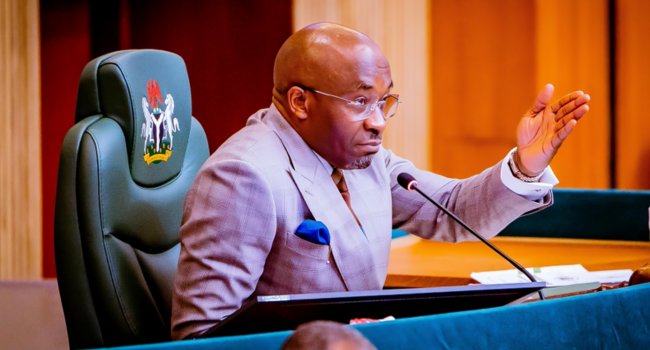
Deputy Speaker of the House of Representatives, Benjamin Kalu, has opposed a move to invite the chairman of the Independent National Electoral Commission (INEC), Prof. Joash Amupitan, to brief lawmakers during plenary on preparations for the 2027 general elections.
Kalu argued that Amupitan’s recent public briefing was sufficient for the moment and that further questions about the commission’s readiness should be handled by the House Committee on Electoral Matters rather than the entire chamber.
The disagreement arose on Wednesday when the House considered a motion sponsored by Minority Whip Mansur Soro and Deputy Minority Leader Abdulsamad Dasuki, who sought to bring the INEC chairman before lawmakers to explain the commission’s preparations for the elections.
Opposing the proposed plenary appearance, Kalu said the commission had already engaged the public on its preparations and should not be subjected to what he considered an unnecessary additional exercise at a critical stage of the electoral process.
He maintained that the relevant standing committee had the responsibility to oversee INEC and should be allowed to perform that role.
According to Kalu, inviting Amupitan before the full House shortly after his public engagement could undermine the committee’s mandate and risk creating unnecessary anxiety about the electoral process.
He also argued that lawmakers should support the commission’s preparations while directing outstanding concerns through the appropriate oversight channel.
Kalu’s position did not amount to a rejection of legislative scrutiny of INEC. Instead, he called for the proposed engagement to take place at committee level, where lawmakers could question the commission on specific issues relating to election preparations.
The Deputy Speaker’s proposed amendment was seconded by Babajimi Benson, a member of the House from Lagos State.
Speaker of the House, Tajudeen Abbas, subsequently put the amendment to a voice vote, and lawmakers supported the proposal to refer the matter to the Committee on Electoral Matters.
The committee is expected to engage the electoral commission on its readiness for the 2027 polls, amid concerns about voter registration, election logistics, security and the participation of eligible voters in areas affected by insecurity.
Soro and Dasuki had raised concerns about INEC’s operational preparedness, including difficulties reported at Continuous Voter Registration centres and the risk that insecurity could prevent some Nigerians from accessing polling units.
The House’s decision leaves the proposed engagement with INEC intact, but shifts it from a briefing before the full chamber to a committee-level exercise.