 Trendsmill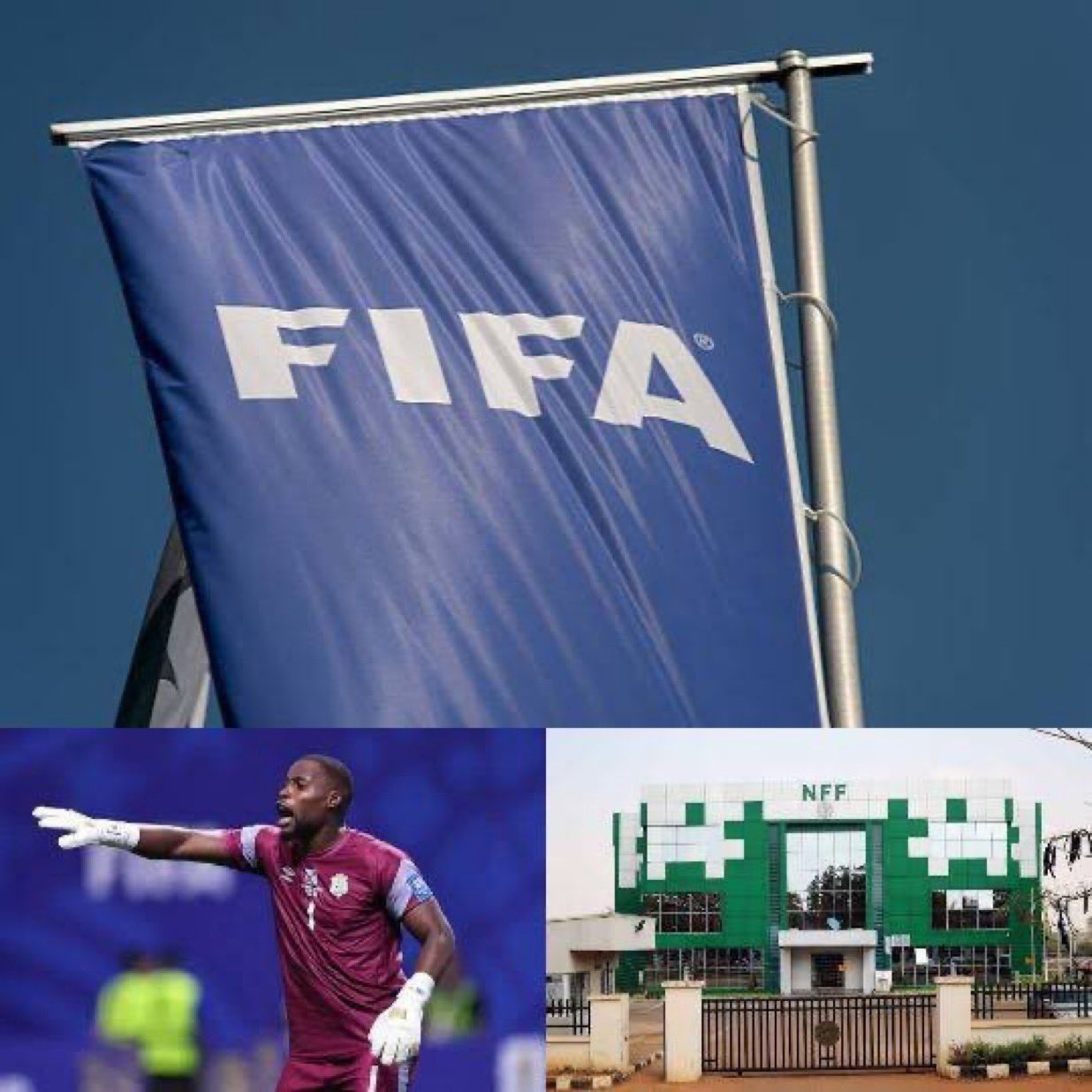
The Nigeria Football Federation (NFF) reportedly sent its complaint against the Democratic Republic of Congo (DR Congo) to the wrong email address, a development cited among the technical grounds for FIFA’s rejection of Nigeria’s protest over player eligibility.
According to a report by Vanguard on Thursday, a source at the National Sports Commission (NSC) said FIFA faulted the NFF for submitting its petition through the office of the general secretary instead of the designated legal portal.
The revelation has added another layer to the controversy surrounding Nigeria’s failed attempt to challenge DR Congo’s participation in the 2026 FIFA World Cup qualifying playoffs.
Nigeria had accused DR Congo of fielding ineligible players, including goalkeeper Lionel Mpasi, during their decisive playoff encounter.
The Super Eagles lost the match 4-3 on penalties after both sides finished regulation time and extra time level at 1-1. The defeat sent DR Congo through to the intercontinental playoffs.
Vanguard reported that FIFA’s decision to dismiss Nigeria’s complaint rested on procedural grounds, including the alleged use of an incorrect email channel and the late filing of the petition.
However, the NSC source questioned FIFA’s position on the email issue, arguing that the NFF had followed the usual correspondence route by sending its complaint to the general secretary.
According to the source, the general secretary’s office typically receives communications from member associations and directs them to the appropriate departments when necessary.
The source also criticised the deadline argument, maintaining that procedural restrictions should not prevent authorities from addressing alleged breaches of player eligibility rules.
The dispute centres on whether DR Congo properly completed the requirements for Mpasi to switch his international allegiance from France, whose youth teams he previously represented, to the Congolese national team.
An investigation by The New York Times previously reported that FIFA’s legal officials had identified problems with the goalkeeper’s eligibility documentation. FIFA nevertheless rejected Nigeria’s complaint on technical grounds, according to reports on the investigation.
The decision has drawn renewed scrutiny because DR Congo subsequently defeated Jamaica to secure a place at the 2026 World Cup, leaving Nigeria out of the tournament.
Nigeria’s case has also raised questions about FIFA’s handling of eligibility disputes and whether procedural requirements received greater weight than the substance of the allegations.
The NFF had challenged the eligibility of several DR Congo players after the November 2025 playoff defeat, alleging irregularities surrounding the documentation used to qualify some members of the Congolese squad.
FIFA’s rejection of the petition preserved DR Congo’s qualification route, while the latest report has shifted attention to how the Nigerian federation submitted its complaint and whether the governing body adequately communicated its procedural requirements.

 Oluwatosin Haruna