 Trendsmill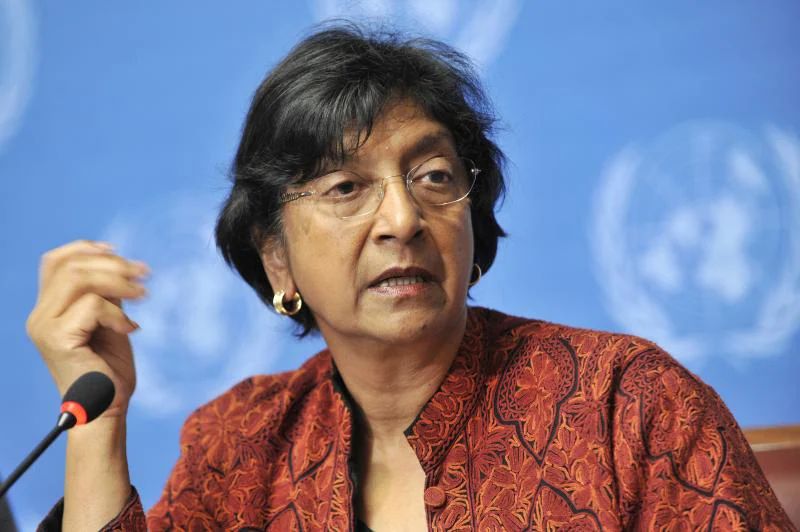
South African judge and former United Nations human rights chief Navi Pillay has reportedly won the 2026 Nobel Peace Prize in recognition of her work on human rights, international justice and accountability.
Pillay, whose full name is Navanethem Pillay, has spent decades defending human rights and advocating for justice, building an international reputation through her work in South Africa’s legal system, international criminal tribunals and the United Nations.
Her career spans some of the most significant human rights issues of recent decades, from the fight against apartheid in South Africa to investigations into alleged international crimes and efforts to protect civilians affected by conflict.
Born in 1941 in Durban, South Africa, Pillay began her legal career during apartheid, when racial discrimination restricted the rights and opportunities of the country’s Black population.
She later became the first Black woman to serve as a High Court judge in Natal, now known as KwaZulu-Natal, marking a significant milestone in South Africa’s legal history.
Her experiences under apartheid helped shape her commitment to equality, human dignity and the principle that no individual should be above the law.
Pillay subsequently moved into international justice, serving as a judge at the International Criminal Tribunal for Rwanda, which was established to prosecute those responsible for the 1994 genocide.
She later served as a judge at the International Criminal Court, which deals with individuals accused of serious crimes under international law, including genocide, war crimes and crimes against humanity.
Between 2008 and 2014, Pillay served as the United Nations High Commissioner for Human Rights, a position that placed her at the centre of international efforts to address abuses, discrimination and violations of fundamental freedoms.
During her tenure, she worked to strengthen human rights protections and draw attention to abuses in different parts of the world.
Her career has also involved investigating allegations of serious violations in conflict zones.
Pillay served as head of the United Nations Independent International Commission of Inquiry on the Occupied Palestinian Territory, including East Jerusalem, and Israel. The commission’s work brought international attention to allegations of serious violations during the conflict in Gaza.
In 2025, the commission concluded that Israel had committed genocide in Gaza, a finding rejected by the Israeli government.
Her involvement in such investigations has kept her at the centre of debates about international accountability and the responsibility of governments to comply with international law.
The Nobel Peace Prize is one of the world’s most prestigious awards. It recognises individuals and organisations whose efforts have made significant contributions to peace.
Pillay’s reported selection comes amid continuing conflicts and concerns about the ability of international institutions to hold powerful governments and individuals accountable for alleged abuses.
Her career has highlighted the importance of legal institutions in addressing serious crimes, protecting vulnerable communities and ensuring that victims can seek justice.
The 2026 Nobel Peace Prize is valued at 11 million Swedish kronor, with the award ceremony traditionally held in Oslo, Norway, on December 10, the anniversary of the death of Alfred Nobel, who established the prizes.
Pillay’s reported achievement would add to her decades-long record of service in the legal and human rights fields, further cementing her place among prominent international advocates for justice and equality.