 Trendsmill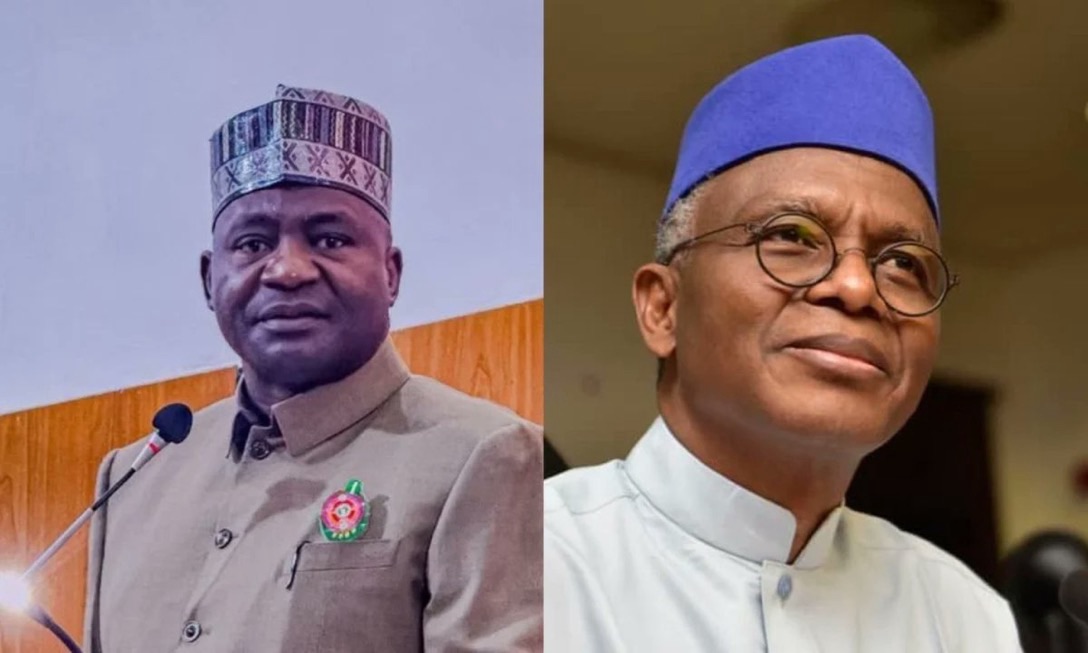
The political dispute between Defence Minister Christopher Musa and former Kaduna State governor Nasir El-Rufai has widened, with a coalition of northern elders urging critics to focus on the former governor’s record rather than attack the minister.
The Coalition of Northern Elders for Peace and Development said Musa should not be vilified for speaking about his assessment of events in Kaduna State during El-Rufai’s eight-year administration.
In a statement signed by representatives of the North-East, North-West and North-Central, the coalition said El-Rufai’s record should be subjected to rigorous public scrutiny, regardless of his political influence or regional standing.
The intervention followed criticism of Musa’s recent comments about El-Rufai and his administration.
Musa, a former Chief of Defence Staff, had accused El-Rufai of policies that, in his view, deepened divisions in Kaduna State. He also spoke about the impact of insecurity and communal tensions in parts of the state during the former governor’s tenure.
The defence minister described the situation in Southern Kaduna as involving what he called deep-seated trauma arising from violence and perceived exclusion.
Musa also credited the current Kaduna State governor, Uba Sani, with efforts to rebuild relationships across communities.
His comments drew criticism from some individuals who argued that the Defence Minister should avoid statements that could deepen political and regional divisions.
One of those critics was Yakubu Sani Wudi, a Nigerian lecturer and researcher based in Saudi Arabia. Wudi reportedly said he had welcomed Musa’s appointment as Defence Minister because of his military background and expected him to promote national unity.
The northern elders, however, rejected the argument that criticism of Musa should be allowed to overshadow questions about El-Rufai’s tenure.
The coalition said those who disagree with Musa were entitled to express their views, but argued that disagreement should not become an attempt to shield a former public office holder from scrutiny.
It challenged El-Rufai’s defenders to address the substance of the allegations raised about his administration instead of concentrating solely on the person making them.
According to the coalition, the performance of a government should not be measured only through infrastructure projects, official statistics or other achievements. It said the wider effects of government policies on citizens, social cohesion, public confidence and institutions should also be considered.
The elders stressed that acknowledging achievements should not prevent scrutiny of controversies surrounding an administration.
The coalition also rejected efforts to frame the dispute as a confrontation between northern communities or regions. It said political loyalty should not take precedence over accountability, good governance and the interests of citizens.
The dispute has brought renewed attention to the political legacy of El-Rufai, who governed Kaduna State from 2015 to 2023.
Musa’s comments and the subsequent response from the northern elders have also reopened debate over the political and security challenges that confronted Kaduna during that period.
The elders maintained that former public officials should remain open to scrutiny after leaving office and that their records should be judged through public debate and evidence.
They further argued that the controversy should not be reduced to a personal disagreement between Musa and El-Rufai.
For the coalition, the central issue is whether the policies and decisions taken during El-Rufai’s administration should be examined openly and whether criticism of those decisions should be separated from attacks on individuals.
The intervention has therefore shifted the focus of the dispute from Musa’s comments alone to a broader question of how Kaduna’s political past should be assessed.
As the debate continues, the competing accounts of El-Rufai’s administration are likely to remain part of Nigeria’s wider discussion about governance, insecurity, political accountability and the responsibility of former office holders to answer questions about their time in power.