 Trendsmill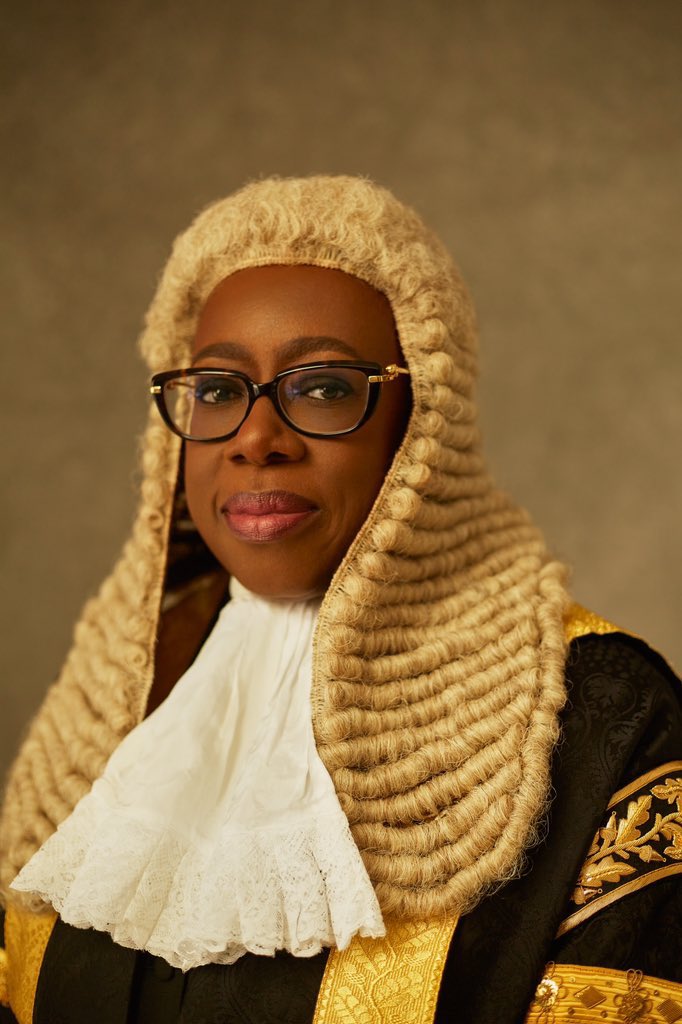
As Nigeria marks 66 years of independence, the country’s judicial history provides another way of tracing the nation’s constitutional development.
Since independence in 1960, 18 Chief Justices have led Nigeria’s judiciary, including two women who became the first and second female holders of the office.
The current Chief Justice of Nigeria, Justice Kudirat Motonmori Olatokunbo Kekere-Ekun, became the substantive head of the judiciary on September 30, 2024, after initially serving in an acting capacity. She succeeded Justice Olukayode Ariwoola, who retired in August 2024.
The Supreme Court’s official records list the succession of Chief Justices from Justice Adetokunbo Ademola through Kekere-Ekun.
The Chief Justices Since Independence
The 18 leaders of Nigeria’s judiciary since independence are:
1. Justice Adetokunbo Ademola — 1960–1972
2. Justice Taslim Olawale Elias — 1972–1975
3. Justice Darnley Arthur Alexander — 1975–1979
4. Justice Atanda Fatai-Williams — 1979–1983
5. Justice George Sodeinde Sowemimo — 1983–1985
6. Justice Ayo Gabriel Irikefe — 1985–1987
7. Justice Mohammed Bello — 1987–1995
8. Justice Muhammadu Lawal Uwais — 1995–2006
9. Justice Salisu Modibo Alfa Belgore — 2006–2007
10. Justice Idris Legbo Kutigi — 2007–2009
11. Justice Aloysius Iyorgyer Katsina-Alu — 2010–2011
12. Justice Dahiru Musdapher — 2011–2012
13. Justice Aloma Mariam Mukhtar — 2012–2014
14. Justice Mahmud Mohammed — 2014–2016
15. Justice Walter Samuel Nkanu Onnoghen — 2016–2019
16. Justice Ibrahim Tanko Muhammad — 2019–2022
17. Justice Olukayode Ariwoola — 2022–2024
18. Justice Kudirat Motonmori Olatokunbo Kekere-Ekun — 2024–present
The official Supreme Court record confirms the succession and periods of service of the former Chief Justices, with Kekere-Ekun succeeding Ariwoola as the current head of the judiciary.
Two Women Have Led the Judiciary
For more than five decades after independence, the position was held by men.
That changed in 2012 when Justice Aloma Mariam Mukhtar became Nigeria’s first female Chief Justice. She served until 2014.
A decade later, Justice Kudirat Motonmori Olatokunbo Kekere-Ekun became the second woman to occupy the position. She was sworn in as acting Chief Justice on August 23, 2024, before becoming substantive Chief Justice of Nigeria on September 30, 2024.
A Judiciary Shaped by Nigeria’s Political History
The judiciary has operated through different constitutional and political periods in Nigeria, including civilian administrations and successive military regimes.
During military rule, judicial powers were at times restricted by military decrees, including provisions that limited the jurisdiction of regular courts. The transition to the Fourth Republic in 1999 brought a renewed constitutional framework for judicial independence and judicial review.
The judiciary has also played a significant role in resolving political and electoral disputes, particularly since the return to democratic rule.
Today, the Supreme Court remains the country’s highest court, while the Chief Justice of Nigeria heads the federal judiciary and serves as chairman of the National Judicial Council.
As Nigeria celebrates its 66th Independence anniversary, the succession of 18 Chief Justices reflects more than a list of judicial office holders. It also charts the evolution of an institution that has remained central to the country’s constitutional and democratic development.


 Oluwatosin Haruna