
 Trendsmill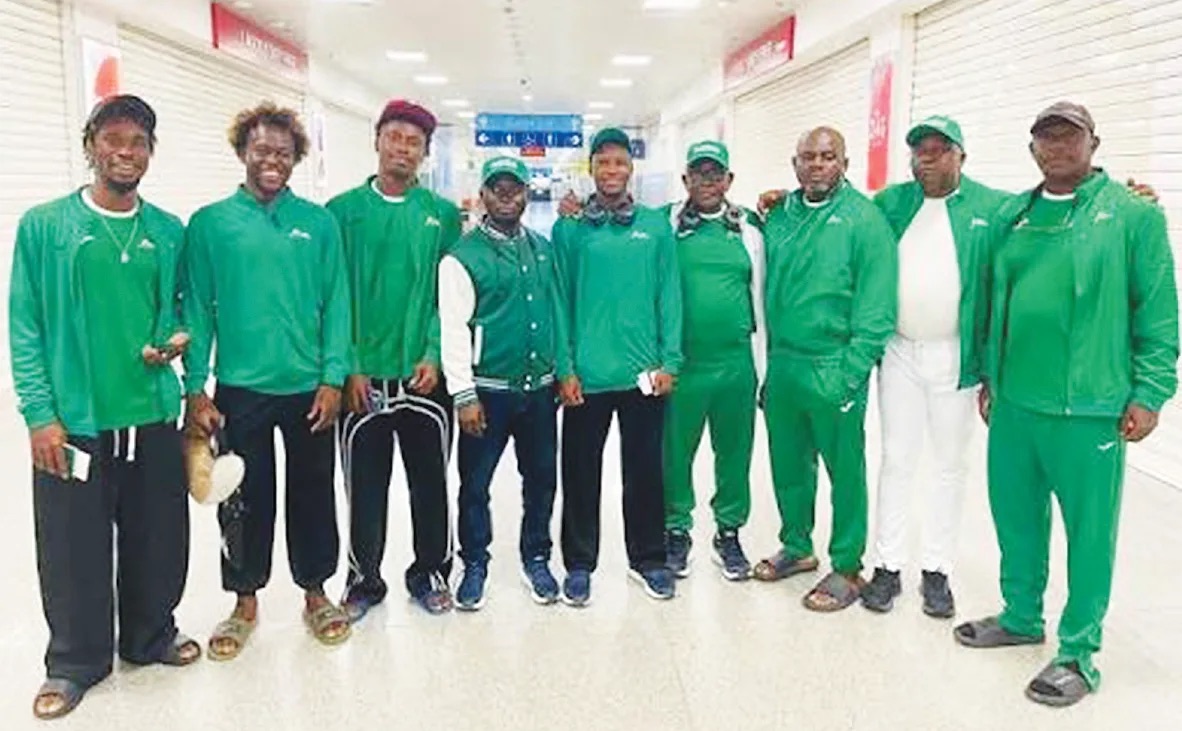
Nigeria’s Davis Cup campaign has reached a defining weekend, with the national team arriving in Morocco for a World Group II tie that offers a route into the competition’s higher tier.
The Nigerian team landed in Rabat on Monday ahead of the September 19–20 contest against Morocco, knowing victory would send them into the World Group I play-offs.
It is a particularly demanding assignment because Nigeria have never beaten Morocco in the Davis Cup.
The countries have met four times, with Morocco winning every encounter. Nigeria will now attempt to change that record on Moroccan territory, where the hosts will also have the advantage of familiar conditions and home support.
Nigeria have not left the preparation to chance.
The squad spent part of its build-up training on clay at the Lagos Country Club in Ikeja, preparing for the surface they will encounter in Morocco. The switch from Nigeria’s more familiar tennis conditions to an overseas clay-court contest makes adaptation one of the key factors ahead of the tie.
Daniel Adeleye and Canice Abua headline the Nigerian squad alongside Michael Emmanuel and Abubakar Yusuf. Coach Benson Isichelli will oversee the team, while teenage prospect Oluwaseun Ogunsakin is also expected to feature in the campaign.
The team earned its place in this round after beating Uzbekistan 3-1 in February. That result was more than another Davis Cup victory. It gave Nigeria an opening to push towards World Group I, with Morocco now standing between the country and that opportunity.
The significance of the tie is clear.
A win in Rabat would take Nigeria into the World Group I play-offs and give the country’s men’s tennis team a chance to compete closer to the top level of the Davis Cup structure.
But Morocco’s record against Nigeria makes the task difficult. The hosts have already shown they know how to handle this matchup, while the Nigerian players must deal with the added pressure of trying to produce a breakthrough away from home.
The preparation in Lagos was therefore designed to remove some of the uncertainty before the first ball is struck.
Nigeria’s players have also arrived with momentum from the Uzbekistan victory, giving the team something tangible to build on rather than entering the tie purely on reputation.
Morocco, meanwhile, will be looking to extend their unbeaten Davis Cup record against Nigeria and use home advantage to maintain their position in the rivalry.
For Nigeria, the equation is straightforward: beat Morocco and move one step closer to World Group I.
After four defeats in four previous meetings, September’s tie offers the national team a chance to change both the immediate result and the history between the two countries.