 Trendsmill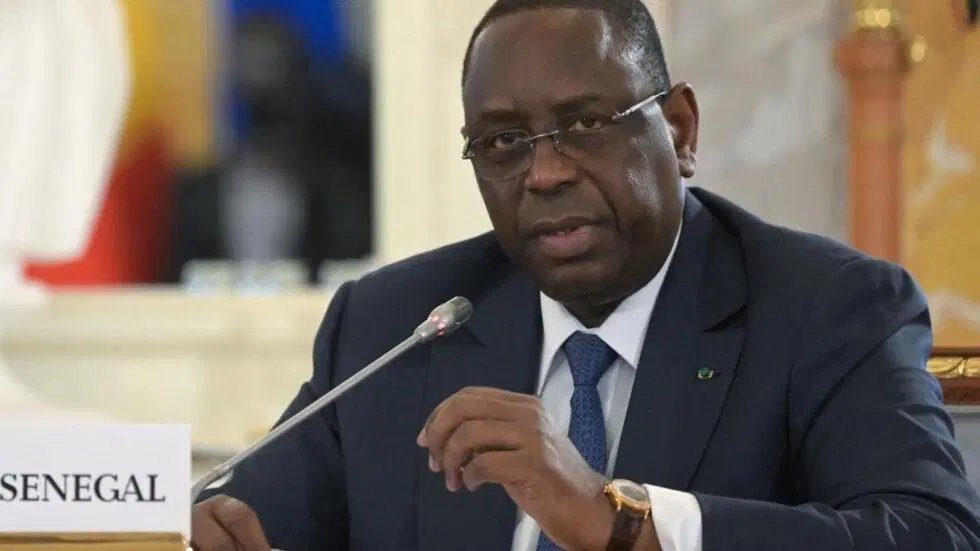
Former Senegalese President Macky Sall has withdrawn from the race to become the next United Nations secretary-general after a fresh Security Council poll exposed the difficulty facing candidates seeking support from the world body’s most powerful members.
Sall announced his decision on Saturday, October 17, a day after the latest informal ballot showed that none of the seven candidates had secured support across the 15-member Security Council without opposition from at least one of its five permanent members.
The former Senegalese leader said he was stepping aside to help create a path towards a consensus candidate, pointing to voting patterns that appeared to favour a contender from Latin America and the Caribbean, potentially a woman.
“I have decided to withdraw my candidacy,” Sall said in a statement released on social media, adding that he hoped his decision would contribute to the emergence of a candidate acceptable to the Security Council.
His withdrawal follows months of diplomatic manoeuvring over who should succeed António Guterres, whose second five-year term as UN secretary-general is scheduled to end on December 31, 2026.
The latest poll, held on Friday, October 16, reinforced the divisions surrounding the selection process, with all seven candidates receiving at least one negative vote from a permanent member of the Security Council.
The five permanent members, Britain, China, France, Russia and the United States, each possess veto power over the council’s recommendation for the next UN chief.
A candidate must secure at least nine favourable votes from the 15 council members and avoid opposition from any of the five permanent members to obtain the council’s recommendation.
Costa Rica’s Rebeca Grynspan remained among the leading contenders after receiving the strongest level of encouragement in the latest ballot. However, she also faced opposition, including from permanent members, leaving the contest unresolved.
Sall, who was nominated by Burundi and later received backing from Senegal’s current President, Bassirou Diomaye Faye, had struggled to build sufficient support in earlier rounds of voting.
The informal ballots are designed to gauge candidates’ acceptability before the Security Council makes a formal recommendation. Their results are not binding, and further rounds of voting are expected as diplomatic negotiations continue.
Sall’s exit narrows Africa’s presence in the contest, leaving Uganda’s Olara Otunnu as the only African candidate among the remaining contenders.
The development comes amid broader discussions about regional representation in the selection of the UN’s top official. By diplomatic tradition, the secretary-general’s position rotates among regions, and Latin America and the Caribbean are widely viewed as having a strong claim to the next appointment.
The prospect of appointing a woman has also featured prominently in the debate, as no woman has ever served as UN secretary-general.
Sall said his candidacy had been motivated by a desire to bring nearly four decades of public service experience to the United Nations. He thanked Burundi’s President Évariste Ndayishimiye, Senegal’s President Faye, Security Council members who supported him and his campaign team.
He also argued that the UN needed a significant transformation of its working methods as it confronts international conflicts, growing geopolitical rivalries and mounting economic and financial pressures.
The former president maintained that Africa must continue to press for a stronger voice in global governance, particularly on peace, security and development.
Sall’s withdrawal does not settle the succession contest. The Security Council must still agree on a candidate before the General Assembly endorses the choice, with the next secretary-general expected to assume office in January 2027.

 Oluwatosin Haruna