 Oluwatosin Haruna
Nigeria’s oil sector utilised $2.15bn in foreign exchange between January and June 2026, representing an 18.7 per cent decline from the $2.64bn recorded in the corresponding period of 2025, despite a sharp rebound in demand towards the end of the second quarter.
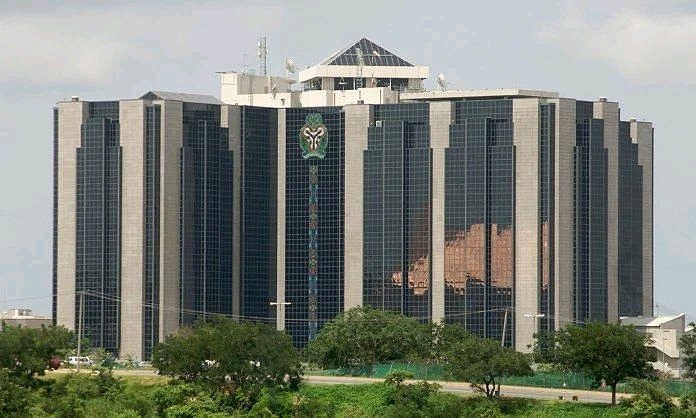
Figures from the Central Bank of Nigeria’s second-quarter 2026 Statistical Bulletin showed that foreign exchange utilisation by the sector fell to $2.148bn in the first half of the year, down from $2.643bn a year earlier.
The reduction amounted to approximately $494.47m, reflecting lower forex utilisation during the first three months of 2026 before demand picked up in the following quarter.
However, the sector’s foreign currency requirements strengthened between April and June, with utilisation rising to $1.249bn from $899.29m in the first quarter, an increase of 38.9 per cent.
The figures, reported in the CBN’s sectoral utilisation table, showed that June recorded the highest monthly forex utilisation by the oil sector during the six-month period.
Oil-sector forex utilisation reached $559.79m in June, up by 47.2 per cent from the $380.41m recorded in May.
The June figure was also 13.8 per cent higher than the $492.12m utilised in the same month of 2025, marking a reversal of the year-on-year decline recorded in each of the preceding five months.
Despite the monthly rebound, total forex utilisation in the second quarter remained below the previous year’s level.
Between April and June 2025, the oil sector utilised $1.384bn in foreign exchange, compared with $1.249bn during the same period in 2026, representing a decline of 9.7 per cent.
March records steepest decline
The largest year-on-year reduction occurred in March, when forex utilisation by the oil sector fell to $234.06m from $517.55m in March 2025.
The decline of $283.49m represented a 54.8 per cent drop, making March the weakest month in terms of year-on-year performance during the period under review.
In January, the sector utilised $381.91m, down 16.6 per cent from $457.83m recorded a year earlier.
February’s figure stood at $283.32m, almost unchanged from the $283.54m recorded in February 2025.
Demand remained below the previous year’s level in April and May, with utilisation falling to $308.66m and $380.41m, respectively.
The April figure was 27.1 per cent lower than the $423.12m recorded in April 2025, while May’s utilisation declined by 18.8 per cent from $468.47m in the corresponding month.
Second-quarter recovery remains limited
A quarterly comparison showed that forex utilisation by the oil sector dropped by 28.6 per cent in the first quarter of 2026, falling from $1.259bn in the corresponding period of 2025 to $899.29m.
Although demand recovered in the second quarter, the improvement was not enough to bring total utilisation back to the previous year’s level.
The figures highlight the uneven pattern of foreign exchange demand in Nigeria’s oil sector during the first half of 2026, with lower utilisation early in the year followed by a substantial increase in the second quarter.
June’s $559.79m utilisation was the highest monthly figure recorded during the six-month period, even as the sector’s cumulative forex use remained nearly half a billion dollars below its level a year earlier.
The CBN data provide a breakdown of foreign exchange utilised by the sector but do not, in the reported figures, explain the specific factors behind the June surge.

 Trendsmill