
 Trendsmill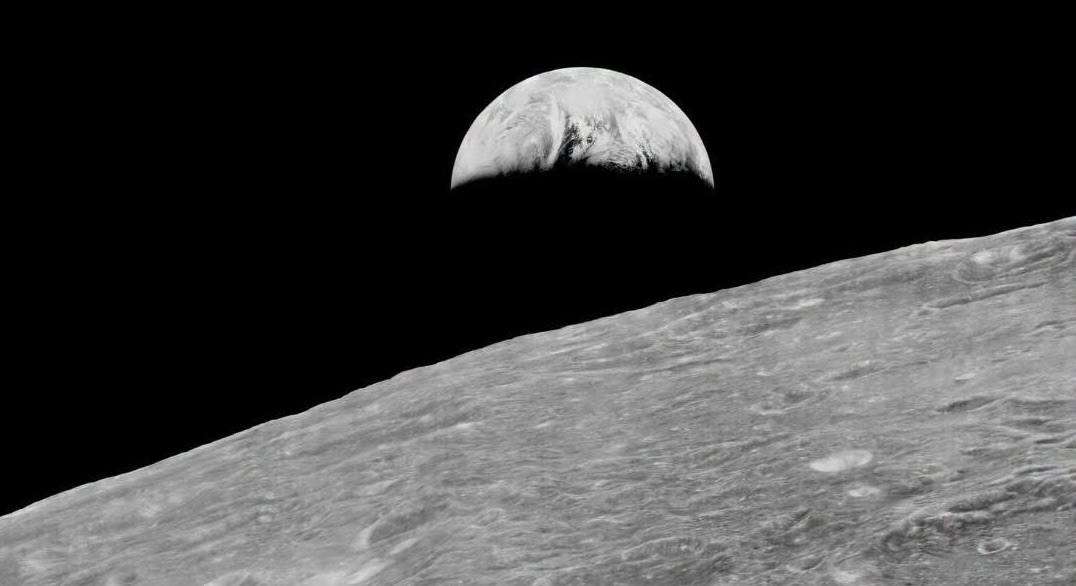
NASA marked a historic achievement on August 23, 1966, when its Lunar Orbiter 1 spacecraft photographed Earth from the vicinity of the Moon.
The mission was primarily designed to photograph the lunar surface and help scientists identify suitable locations for future Apollo landing missions.
But during the spacecraft’s journey around the Moon, its camera was turned towards Earth, producing the first photograph of the planet taken from the vicinity of another world.
The image showed a small Earth against the blackness of space. It was far less detailed than the images produced by modern spacecraft, but its scientific and cultural importance was considerable.
The photograph had to be transmitted over a distance of nearly a quarter of a million miles before being received at a tracking station near Madrid, Spain.
At the time, the technology used to capture and transmit images from deep space was still in its early stages. The resulting photograph was grainy and black and white, but it demonstrated that spacecraft could provide humanity with a completely new perspective of Earth.
The image came before the famous “Earthrise” photograph taken by Apollo 8 in 1968.
Apollo 8’s image would become an enduring symbol of the space age, but Lunar Orbiter 1 had already provided an important first glimpse of Earth from the Moon.
Six decades later, the 1966 photograph remains an important milestone in the development of space exploration and humanity’s understanding of its home planet.